
Give Franchisees the Tools to Launch Powerfully So You Can Expand Your Network
The Beyond Limits Program gives franchisees the strategy, structure, and soul they need for success.
Support Successful Launches
Increase Your Referrals
Build Your Network
Most Franchisors are limited in growing their network when they have franchisees that don’t have a powerful launch
And the frustrating part? It’s almost never the franchise model’s fault.
Unsuccessful franchisees:
Blame the model
Don’t go beyond one unit
Slow your franchise growth
Stay in a fixed mindset
Strain franchise support
It doesn’t have to be this way.

20%-25% of franchise businesses fail in the first 5 years.
- SBA Loan Default Data
We help your emerging franchisees launch powerfully so you can grow your network, without creating a bottleneck with each sale

After Beyond Limits, franchisees:
Grow faster and easier
Launch several locations
Become multipliers
Create a magnetic culture
Expand your franchise network






You're in Good Hands with Beyond Limits
"In 35 years of working with franchise systems, I have never seen a program that addresses what Beyond Limits addresses. The identity and entrepreneurial development of the franchisee is the missing piece in almost every system I have worked with."
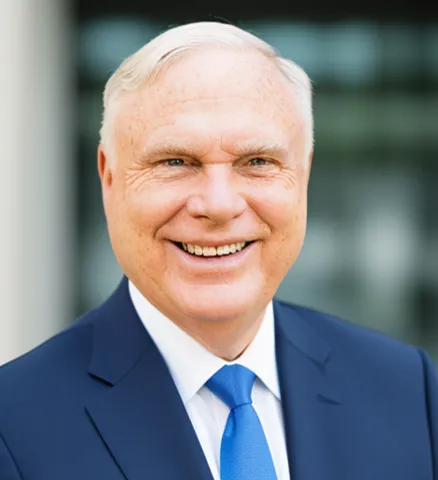
"When a franchisor can tell a prospective franchisee they will receive a full entrepreneurial development program at signing, that is a competitive differentiator that closes deals and builds the kind of franchisee who comes back for a second and third unit."
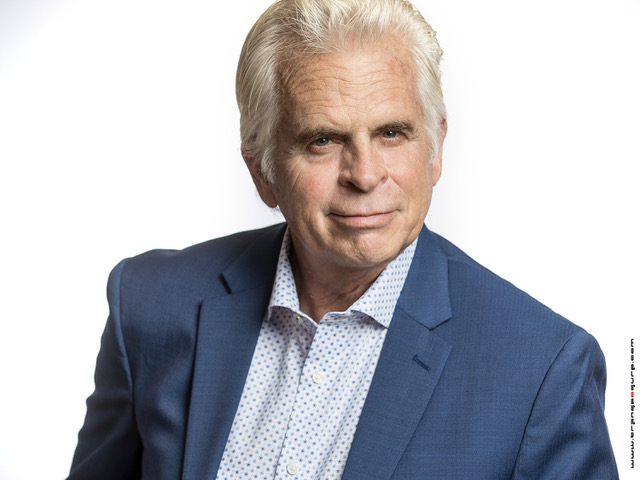
"It's been amazing working with Jenn. Honestly, it's been night to day, and I feel like she was the best gift sent to us from above. It's been a very grateful experience to have her by our side and really help us push our business to the next level. And it's just been an amazing experience."

"1000%, I recommend Jenn for all the franchisors out there who are looking to scale and grow or who have plateaued and need to shift the energy and realign the team, because that's what Jenn's magic is”

"Working with Prosperous Jenn has transformed both me and my business. Her structured, deeply personal coaching brought clarity, confidence, and consistent growth. I went from uncertain solopreneur to empowered business owner. Jenn’s approach is unmatched, and her impact is real. If you're ready to grow, she's the coach you need."

Meet Your Guide
Jennifer Maher
With over two decades of coaching business owners, Jenn Maher knows the playbook only takes you so far. As the official coach for NLX and Collaborative Franchise Systems, and a private coach for brands like Physical Therapy Now and City Publishing, she helps entrepreneurs and franchisees launch strong and grow.
Her Beyond Limits program is built on three key areas: Strategy, Structure, and Soul. It helps business owners build a stronger business while creating more freedom.
As a certified Investment Grade Architect, Jenn helps entrepreneurs look at the bigger picture. She asks one important question: Are you building an asset that gives you freedom, or just creating income that keeps you trapped?

"Alignment is the New Hustle"
~ Jenn Maher
Getting Started with Beyond Limits is Easy
Step 1
Book Your Free Consultation Below
Step 2
Install the Beyond Limits framework
Step 3
Your Network Grows Faster and Easier
If you’re ready to grow your network with ease, Beyond Limits is the right decision.
Book a free consultation today.
By Jenn Maher
Beyond Limits Growth Franchising FAQs
LAUNCH STAGE
Your first franchisees are signed. Here's what actually matters.
1. What should I focus on with my first 1 to 3 franchisees?
Your first few franchisees aren't just revenue, they're your proof. Every future prospect will eventually call them during due diligence, so your entire focus should be making sure they succeed, loudly and provably. That means more hands-on support than your model will scale to long-term, and it means documenting everything you learn from their real-world questions, because those questions are the gaps in your training that you haven't found yet.
2. How do I train and onboard franchisees without a big team yet?
You don't need a big team, you need a repeatable one. Build the onboarding sequence once, in writing or on video, so training doesn't live only in your head or your calendar. It will feel slower than just telling someone yourself. It's actually faster, because it's the only version of "you" that scales past franchisee number three.
3. What KPIs should I track from day one with a new franchisee?
Track the leading indicators, not just revenue: are they hitting the operational milestones in the timeline you gave them, are they using the systems as designed or improvising around them, and are they reaching out with questions (engaged) or going quiet (a warning sign). Revenue lags. Behavior doesn't.
EMERGING STAGE
You've proven it once. Now you're proving it travels.
4. What's the difference between an emerging franchise and a growth-stage franchise?
An emerging franchise is usually anywhere from your first franchisee to roughly 10 to 20 units, still proving the model works for someone other than you and still building the muscle to support franchisees at a distance. A growth-stage franchise has cleared that proof point and is scaling deliberately, adding units, territories, and often multi-unit operators, while protecting the unit economics that made the brand worth buying into in the first place. Most systems don't stall from a bad concept. They stall because nobody rebuilt the support systems for the size they'd actually grown into.
5. Why does franchise growth stall after the first few locations?
This is the mediocre middle: the 80% of franchise systems that open a handful of units, plateau, and never break through to real scale. It happens because the systems, training, and support that worked fine for 3 franchisees you knew personally don't hold up at 15, and founders keep trying to run growth the same way they ran the pilot. Certainty-driven growth compounds. Fear-driven growth survives, until it doesn't.
6. How do I market my franchise to attract the right franchisees, not just any franchisee?
Stop marketing your opportunity and start marketing your proof. Emerging brands that grow past the plateau lead with real franchisee performance data, real validation calls with existing owners, and a clear picture of who actually thrives in the model, not a glossy pitch deck built around potential. The founders you want doing due diligence on you are the same ones who'll actually call your existing franchisees and ask hard questions. Make sure those calls go well.
7. What's the biggest mistake emerging franchisors make when trying to hit growth stage?
Selling faster than they can support. Every new franchisee agreement feels like a win, but a franchisee who fails because the training, systems, or support weren't ready for them doesn't just cost you that royalty stream, it costs you the validation call every future prospect will make before they sign. Growth that outpaces your infrastructure isn't growth. It's exposure.
GROWTH STAGE
Scaling deliberately, without breaking what works.
8. How many locations should I have before I expand into new territories?
There's no universal number, but there is a universal test: can your current franchisees hit their numbers with the support you have today, without you personally intervening? If the answer is yes across multiple units in different markets, you've validated the model travels. If you're still firefighting in your existing territories, opening new ones just multiplies the fires. Expand the map after you've proven the model, not instead of proving it.
9. How do I grow my royalties without hurting franchisee profitability?
You don't grow royalties by raising the rate. You grow them by growing what franchisees keep. Royalties are a percentage of franchisee revenue, so the fastest, most durable way to increase them is Collaborative Revenue Sharing done right: helping your existing franchisees add revenue streams, improve margins, and run better operations, so their growth becomes your growth. A royalty structure that only works when franchisees are struggling isn't a growth strategy, it's a countdown.
10. What support systems do growing franchise systems need that emerging ones don't?
Emerging systems can survive on founder access and improvisation. Growth-stage systems need documented SOPs and KPIs that don't depend on you, a real onboarding and training pipeline for franchisees you'll never meet in person, and a way to spot an underperforming location before it becomes a churn statistic. This is the SOPs & KPIs pillar of Investment Grade Franchising™, and it's usually the exact infrastructure that separates brands stuck at 10 units from brands scaling past 50.
11. When is it time to bring in fractional leadership, like a COO or sales leader, instead of doing it all myself?
When you're the bottleneck. If every franchisee escalation, every new territory decision, and every sales conversation still runs through you personally, you've hit the ceiling of what one founder can carry, regardless of how good you are. Fractional executive leadership, a COO for operational structure, a sales leader for a predictable pipeline, lets growing systems get seasoned leadership at the stage they're actually in, without full-time payroll they can't yet support.
12. Should I recruit single-unit franchisees or focus on multi-unit operators as I grow?
Multi-unit operators grow your footprint faster with fewer relationships to manage, but they also concentrate risk: one disengaged multi-unit operator can stall growth across several locations at once. Most systems that scale well do both deliberately, using single-unit franchisees to prove new markets and multi-unit operators to scale proven ones, rather than defaulting to whichever type walks through the door first.
SCALING
Building a network that runs without you in the middle of it.
13. How do I keep franchisees engaged and reduce turnover as I scale?
Franchisee retention is a leading indicator, not a lagging one; by the time someone's shopping for an exit, you've usually missed six months of warning signs. Scaling systems build in regular check-ins, peer community among franchisees, and a clear path for high performers to grow (more units, more responsibility, more revenue), so ambition gets channeled into your system instead of out the door.
14. How do I know if my franchise system is actually ready to scale, versus just ready to add one more unit?
Scaling readiness isn't about how many locations you have. It's whether your Franchise Readiness Level, your training, your KPIs, your support systems, was built for the network you're becoming or just the network you started with. If you can onboard a new franchisee, in a market you've never operated in, without personally flying in to save it, that's real scaling readiness. If you can't, growth will just multiply whatever's currently held together by your own effort.
15. How do I maintain brand consistency across a large franchise network?
Consistency at scale isn't enforced through inspections, it's built into the systems franchisees actually use every day: the same training, the same KPIs, the same escalation path, regardless of whether a location is your fifth or your fiftieth. The brands that stay consistent past 50 units are the ones where the standard is baked into the workflow, not policed after the fact.
16. What technology or platforms do scaled franchise systems need that smaller ones don't?
At a handful of locations, spreadsheets and personal check-ins can hold a system together. Past that, you need real-time visibility: who's engaged, who's executing, who needs support before performance issues surface, plus a training platform that delivers consistent onboarding without you personally present for it. The technology doesn't replace the relationship with your franchisees. It's what lets that relationship scale past the number of hours in your week.
17. What does a compound business model look like for a growing franchise?
A compound business model means your franchisees aren't dependent on a single revenue stream that can be commoditized or undercut locally. Scaling systems build in multiple profit centers per location, retail plus service, product plus subscription, whatever fits the concept, so franchisee profitability (and your royalty base) isn't riding on one number. This is the fourth pillar of Investment Grade Franchising™, and it's often the difference between a franchise that survives a local competitor and one that doesn't notice them.